Powered by May


Ma Qi Lin
Professor, Zhejiang Gongshang University Law School
Zou Mengqiu
Master student of Zhejiang Gongshang University Law School
principal items
First, the meaning and development model of business environment
Second, the priority of scientific and technological innovation in the Yangtze River Delta g60 science and technology corridor construction
Third, the development opportunity brought by the signing of rcep for the construction of g60 Science and Technology Corridor
Fourth, the main challenges faced by g60 Science and Technology Corridor in docking rcep
V. Countermeasures and suggestions for g60 Science and Technology Corridor Construction in Yangtze River Delta under the influence of rcep

As a comprehensive, modern, high-quality and mutually beneficial regional free trade agreement, the signing of rcep marks the official launch of a free trade zone covering one third of the world economy, with the largest number of members and the most potential for development, which brings opportunities and challenges to the development of China’s state-owned business environment. The construction of g60 Science and Technology Corridor in the Yangtze River Delta has made the economic development in the Yangtze River Delta region form a unique business environment model dominated by scientific and technological innovation. From the perspective of the planning and construction of g60 Science and Technology Corridor in the Yangtze River Delta, this paper analyzes the opportunities and challenges of rcep in the development of China’s state-owned business environment, and puts forward corresponding countermeasures and suggestions for the challenges.

First, the meaning and development model of business environment
A good business environment in emerging markets not only helps enterprises to carry out market-oriented economic activities, promote the effective flow of processing elements of emerging products, and promote the economic development of emerging industrial product processing enterprises, but also helps to promote the healthy and vigorous development of the socialist market economy with Chinese characteristics. Some scholars believe that the business environment consists of various important factors that may directly promote China’s rapid economic growth, such as "climate, geography, economic development policies, history and socio-economic development". At the same time, some scholars sum up the improvement of China’s business environment as the relevant laws and policies used by the state or an administrative region to promote and regulate commercial activities, and put the complexity of legal supervision process, the completeness of laws and regulations system and the transparency of local government information disclosure into the concept of business environment. At present, the most convincing business environment assessment system is the Business Environment Report issued by the World Bank. According to the comprehensive environmental assessment standard of the World Bank’s Business Environment Report, the business environment refers to "a lot of time and labor costs required by an enterprise in starting a company, applying for a construction supervision license, obtaining public electricity, registering personal property, obtaining commercial credit, paying taxes, cross-border service trade, performing contracts, handling enterprise bankruptcy and so on". In the practice of optimizing the business environment, Singapore, Hong Kong, Shenzhen, Tianjin and other regions in China have developed a unique business environment model, which has certain reference significance for optimizing the business environment of g60 Science and Technology Corridor in the Yangtze River Delta.
Singapore: Priority Mode of Rule of Law
Singapore’s public administration management policies and legal systems are relatively complete, with a sound litigation system and a better intellectual property protection system in the world, which provides a strong guarantee for the development of intellectual property rights in Singapore. A sound legal system, a fair and just judicial trial system, a law enforcement system for the people, and citizens’ good awareness of abiding by the law have formed an excellent legal environment in Singapore, which plays an important role in encouraging immigrants and introducing high-level talents. A sound and complete judicial trial system also provides a strong guarantee for the protection of citizens’ legitimate rights and interests.
Hong Kong, China: Internationalization Priority Mode
As one of the "Four Little Dragons" of Asian economic development, and a world-famous offshore financial center and free port, Hong Kong has always maintained an open and transparent business environment to promote economic activities. Hong Kong is connected with many important markets in the region. It has an absolute geographical advantage, occupies the best business stronghold and has a far-sighted international vision. As a prosperous business center in the Asia-Pacific region, Hong Kong has provided a highly secure and robust regulatory system for banking, securities and futures, insurance and retirement plans with reference to international best operating models and standards. Hong Kong’s advanced commercial infrastructure, international commercial transportation, international logistics and communication, public services for the people, municipal construction, urban management and road planning have all promoted Hong Kong to become a high-level international financial center.
Shenzhen, China: Efficiency Priority Mode
Shenzhen regards the construction of smart cities as an important starting point for deepening reform, optimizing business environment and enhancing people’s well-being, and has launched a series of reform measures to improve the efficiency of government services and market operation. The information sharing and reuse of personal electronic application license and other electronic application materials have been strengthened, and the function of "second report" (non-inductive quick application) of electronic declaration has been introduced, that is, on the basis of mutual trust, mutual use and mutual recognition of data, the application materials are directly retrieved by the application system to automatically fill in the relevant information of the application form, thus realizing the whole process of government affairs handling without meeting, zero running and full automation.
Tianjin, China: Convenience Priority Mode
Tianjin takes promoting steady economic development, improving financial service system, gathering high-tech industries, and standardizing legal operation as its development strategic goals, and taking investment convenience and trade convenience as its starting point, it actively promotes the "one-line operation" of registration matters such as enterprise start-up, change and cancellation, expands the application of electronic business licenses, and simplifies the procedures for canceling enterprises to optimize enterprise start-up services. By enhancing the convenience of online government services, improving the ability level of government services, and promoting the development of the platform of "one government, one network", the government’s government service level has been improved. By enhancing the convenience of cross-border trade, improving the convenience of enterprise financing and improving the efficiency of obtaining water and gas, we will create a dynamic market environment.

G60 Science and Technology Corridor in Yangtze River Delta: Priority Mode of Scientific and Technological Innovation
The g60 Science and Technology Corridor along the Yangtze River Delta has become one of the regions with the most vitality in China’s economic development and the highest degree of urban economy and modernization in the world. It is an economic and trade highland that promotes the change of China’s economic system and is the main driving force for implementing the development ideas in the new era and leading the construction of innovative demonstration zones. G60 Science and Technology Corridor in the Yangtze River Delta should fully absorb Singapore’s rule of law priority model, Hong Kong’s internationalization priority model, Tianjin’s convenience priority model and Shenzhen’s efficiency priority model, and give full play to its own advantages to create a business environment model featuring scientific and technological innovation on the basis of enhancing the legal protection of the business environment and improving the internationalization, convenience and efficiency of the business environment. G60 Science and Technology Corridor in Yangtze River Delta is committed to transforming traditional advantageous industries and developing high-tech industries, making full use of the advantages of industrial innovation, improving the level of scientific and technological innovation, cultivating the real economy and advanced manufacturing highlands, and providing a unique business environment for building the scientific and technological innovation center of Yangtze River Delta urban agglomeration.
Second, the priority of scientific and technological innovation in the Yangtze River Delta g60 science and technology corridor construction
As one of the regions with the fastest sustained economic development, the highest level of openness and innovation and the best independent research and development capability in China, the Yangtze River Delta region has an important position and function in the stable development pattern of the national economy. Solidly promoting the integration process of Shanghai, Zhejiang, Jiangsu and Anhui plays an important role in promoting the high-quality economic development of the entire Yangtze River Economic Belt. Since the 13th Five-Year Plan, the construction of g60 Science and Technology Corridor has gone through the "triple jump" of version 1.0, version 2.0 and version 3.0, extending from version 1.0 of "Shanghai Songjiang Science and Technology Corridor" founded in May 2016 to version 2.0 of "Shanghai Jiahang g60 Science and Technology Corridor" and then to version 3.0 of the Yangtze River Delta g60 Science and Technology Corridor which runs through "three provinces, one city and nine cities in the Yangtze River Delta", gradually deepening the integration of the Yangtze River Delta region. Version 3.0 of g60 Science and Technology Corridor in the Yangtze River Delta has unique advantages and conditions in promoting the flow of innovation factors, Industry-University-Research cooperation, and the integration of production and city development, which is of great significance to the optimization of business environment in the Yangtze River Delta region.
Promoting the flow of innovation elements with g60 Expressway as a link
G60 Science and Technology Corridor takes g60 Expressway as the link, connecting nine cities in series, namely Shanghai, Jiaxing, Hangzhou, Jinhua, Suzhou, Huzhou, Xuancheng, Wuhu and Hefei. Based on the transportation network, it breaks down the administrative barriers among cities, so that innovative elements can flow freely among cities. Different from the previous construction of industrial parks by Shanghai enterprises in other places, g60 Science and Technology Corridor is a window for enterprises from all over the world to set up product R&D centers, product incubators and talent docking in Songjiang, while "R&D achievements and production links are transferred to Jiangsu, Zhejiang and Anhui". Due to the difference of economic development level, there is a certain gap between the innovation ability and industrial development ability of the nine cities. As the core area of the Yangtze River Delta region, Shanghai is rich in high-end science and technology resources and platform advantages, and has an international high-quality living environment, which has the advantages of attracting high-end R&D talents in medical treatment, schooling, international exchange and air transportation. Innovation is also inseparable from the support of scientific research institutions. For some prefecture-level and county-level cities in g60 Science and Technology Corridor, the level of scientific research is relatively backward, while Songjiang District is rich in talents, technology, funds, devices, institutions, projects and other elements. The establishment of g60 Science and Technology Corridor makes the advantages of science and technology resources in Songjiang University Town not only in Songjiang area, but also continuously exported to the industrial production of cities along the g60 Science and Technology Corridor, transforming academic knowledge into practical technology.
Promoting Collaborative Innovation with "Industry-University-Research Cooperation" as the Carrier
G60 Science and Technology Corridor in the Yangtze River Delta vigorously promotes multi-agent collaborative innovation of specialized science and technology service platforms, research institutes and leading enterprises, which provides an important driving force for innovation-driven and transformational development in the Yangtze River Delta region. Scientific and technological innovation needs to give full play to the subjective initiative of innovation and research subjects. g60 Science and Technology Corridor gathers high-tech industries, which requires high scientific research capabilities of enterprises. The independent research and development capabilities of enterprises along g60 Science and Technology Corridor are uneven, and the "Industry-University-Research Cooperation" model of universities, enterprises, research institutions and science and technology platforms can form a joint force of scientific and technological innovation, which effectively makes up for the shortcomings of independent research and development within enterprises. G60 Science and Technology Innovation Corridor has built a "Industry-University-Research" collaborative innovation system. Colleges and universities give full play to their academic characteristics and dominant disciplines, strengthen basic research on scientific and technological innovation, carry out research and development on key technologies of industrial commonality, cultivate innovative talents, and jointly demonstrate their scientific research capabilities with research institutions and science and technology innovation platforms. Enterprises are responsible for applied research and technology development, and transform basic innovations into practical technologies to promote the industrialization of scientific and technological achievements.
The leading corridor for the integration and development of production and city
The good business environment formed by the integration of production and city is conducive to promoting technological innovation and urban construction in this region. In the process of promoting the integration of production and city development, g60 Science and Technology Corridor adheres to the concept of "science and technology, humanity and ecology" and adheres to networking, service, synergy and intelligence. Through the network to promote the spatial organization of the integrated development of production cities, relying on the networked development of big data, we will gather innovative elements and promote innovative achievements. By promoting the synergy of information resources in cities and making full use of Internet information technology, we can effectively promote the integration and sharing of information resources in cities and realize accurate and coordinated urban governance. Through the intelligentization of government information, it provides multi-level, all-field and high-quality public services for the integration of production and city, promotes the disclosure of government information, and strengthens the coordination and cooperation between departments. By improving service, we will strive to build a scientific and technological innovation system, promote industrial transformation and upgrading, adjust industrial structure, and accelerate the integration and development of manufacturing and service industries. The cities along g60 Science and Technology Corridor adhere to the matching of urban planning and industrial development, take the government as the core, guide the development of high-tech industries through the improvement of urban functions, attract high-end talents to gather, and create an emerging industrial ecology.
Third, the development opportunity brought by the signing of rcep for the construction of g60 Science and Technology Corridor
Contribute to industrial technological innovation.
As one of the most economically developed regions in China, the rent and labor costs of enterprises in the Yangtze River Delta region are rising continuously, and industrial upgrading and transfer have become one of the important directions for the development of enterprises in this region. G60 Science and Technology Corridor in Yangtze River Delta aims to build an advanced corridor from China manufacturing to China creation, and a pilot corridor of double-wheel innovation in science and technology and system. Creating innovative industrial clusters efficiently and rationalizing industrial upgrading and industrial transfer are the development directions of g60 Science and Technology Corridor. The signing of rcep will make the Asia-Pacific region become the largest unified market in the world. The rich resources and markets in the Asia-Pacific region can largely reconstruct the layout direction of China’s industrial transfer, providing more transfer directions for the industrial transfer of g60 Science and Technology Corridor. At the same time, due to the opening of the market, it is bound to bring closer technical exchanges and provide a broader platform and technical conditions for the development of technology-intensive industries. Large-scale market is an important driving force for technological innovation of enterprises. The more investment and advanced technology are used for product innovation, the more large-scale market is needed to level R&D costs and build independent brands.
Contribute to the substantial improvement of the investment environment
Rcep has made provisions on tariff reduction, technical barriers, trade aid, investment and financing, services and trade, intellectual property rights, e-commerce and technical exchange, adhered to the principle of most-favoured-nation treatment, protected the free transfer of investors’ assets, enhanced investment convenience, improved trade freedom, compensated property losses caused by trade disputes, and improved the business environment of member States. With the increasing financial and policy support of local governments along g60 Science and Technology Corridor, the business environment in the Yangtze River Delta has been improved as a whole. The signing of rcep will become an important driving force for g60 Science and Technology Innovation Corridor to further develop its technological innovation advantages, and promote the transformation and upgrading of manufacturing, financial industry, Internet economy and other industries along the corridor. At the same time, the improvement of investment freedom and convenience also makes capital flow more convenient and free. Rcep has strengthened the financial supervision rules, which is of great significance for improving the transparency of capital flows and reducing the uncertainty of trade risks.
Contribute to the reconstruction of regional value chain.
Under the realistic background of "anti-climbing repression" in the global value chain, rcep regional value chain cooperation has not only found an "alternative scheme" for China manufacturing, but also helped to play a demonstration effect. The signing of rcep will greatly change the direction of China’s industrial layout, enhance China’s international status, and break the technical restrictions and trade containment of developed countries in Europe and America. From the supply side, the huge low-cost production environment brought by the signing of rcep can effectively undertake China’s low-end manufacturing industry and provide a broad industrial transfer environment for the reconstruction of China’s regional value chain. From the demand side, the trade of semi-finished products and end products is more and more inclined to rcep internal transactions.
Help people to move freely and conveniently.
Rcep regards the standardization of cross-border movement of natural persons as a separate chapter, and promotes the cross-border movement of personnel in member countries by standardizing and simplifying visa and business visit procedures, greatly reducing the cost of personnel movement. In a word, firstly, it has expanded the consumption market of each member, which is conducive to the expansion of g60 Science and Technology Corridor market and the development of the industry. The second is to provide a cheaper labor market. G60 Science and Technology Corridor is densely populated. Although it is committed to building technology-intensive industries, it also has a huge demand for basic labor. The signing of rcep will integrate the labor in all members and transfer the labor from surplus labor areas to shortage areas. The third is to provide technical talents. The innovation of science and technology is inseparable from high-level talents. The construction of g60 Science and Technology Corridor needs a large number of high-level talents. The signing of rcep has accelerated the flow of high-tech talents and promoted the development of high-tech industries in China.
Fourth, the main challenges faced by g60 Science and Technology Corridor in docking rcep
The signing of rcep has further opened up the new pattern and space of g60 Science and Technology Corridor in the Yangtze River Delta, which is of great significance to the construction of industrial chain, supply chain and value chain in the region, and has a positive effect on the optimization of business environment in cities along the region, but it also brings some new challenges, mainly including the following points.
The challenge of industrial structure adjustment and technological innovation
The rising value chain should have corresponding cutting-edge innovative technologies. At present, rcep is in the initial stage of development after signing, and the industrial cooperation of all members has not been deepened. The specific direction of China’s industrial adjustment has not yet been determined, and the technical containment has not been alleviated. Although rcep has made provisions on technical barriers, at present, for the sake of their own interests, the management and control of talents and technologies are still strict, and the elimination of technical barriers will not happen overnight. This also means that China still needs to rely on independent innovation to achieve technological breakthroughs in the short term, and the innovative technology development of g60 Science and Technology Corridor still needs to rely on independent research and development of cities along the corridor. At the same time, due to the lack of rapid technological innovation in a short period of time, it is difficult for China’s high-end industries to develop rapidly. The liberalization and facilitation of investment brought about by the signing of rcep will lead to a large number of low-end manufacturing capital flowing to other ASEAN developing countries, which may also directly lead to the "hollowing out" trend of China’s industrial structure.
Internal structural risk
The unbalanced internal development of rcep members enables them to complement each other in economic structure and industrial layout, but this complementarity also brings certain challenges to the business environment in China. China can reconstruct the regional value chain based on rcep, which will make China’s industrial structure climb to the high end of the value chain. However, the process of value chain climbing will inevitably affect the industrial interests of established developed countries, and these countries or regions will also hinder China’s value chain climbing, thus affecting China’s industrial structural transfer and high-quality economic development. As one of the most economically developed regions, the development of g60 Science and Technology Corridor is bound to be affected, which is not conducive to the development of happy technology industry in g60 Science and Technology Corridor. At the same time, as a low-end industrial chain, Southeast Asian countries are also committed to restructuring the regional value chain, and its rising regional value chain will also affect China’s industrial interests and hit China’s low-end manufacturing industry.
External competitive risk
Asia-Pacific economies have built most of the global free trade agreements, and also covered the central region of rcep. Because there are some differences in system and ideology among rcep members, even if countries can still reach an agreement on interest integration at present, the stability of the agreement is still uncertain. Even if the United States has not joined rcep, its influence on some signatories of rcep should not be underestimated. Once China’s high-quality economic development affects the interests of the United States in the Asia-Pacific region, it will use this influence to undermine rcep’s trade agreements. More importantly, Japan, Australia, New Zealand, Singapore, Brunei, Vietnam and Malaysia, which are members of rcep, are also members of cptpp. The disproportionate and complicated international trade agreements often have the risk of "spaghetti bowl" at the same time, that is, complex free trade rules and initiative standards may cause the trade burden of the corresponding members, and may also restrict the in-depth cooperation among the members.
V. Countermeasures and suggestions for g60 Science and Technology Corridor Construction in Yangtze River Delta under the influence of rcep
The signing of rcep not only brings opportunities to g60 Science and Technology Corridor in Yangtze River Delta, but also brings certain challenges. In order to better cope with the challenges and seize the opportunities, we should make a concrete analysis of specific issues.
Broaden the path of innovation and accelerate the reconstruction of regional value chain
Broadening the innovation path, improving the independent innovation ability of enterprises and accelerating the reconstruction of regional value chain are the keys to seize opportunities and meet challenges. First of all, g60 Science and Technology Corridor should open the market of high-tech products more actively, eliminate trade monopoly, actively introduce high-tech products from other developed countries in the agreement, and provide convenient conditions for the flow of innovation factors. Secondly, give full play to the synergy of g60 Science and Technology Corridor in Industry-University-Research, introduce enterprise R&D centers to promote the industrialization of scientific and technological innovation achievements, and gather high-tech enterprises and enterprise R&D centers to promote the industrialization of scientific and technological achievements. In addition, g60 Science and Technology Corridor should aim at the world’s advanced technology, firmly grasp industrial innovation, focus on building new energy vehicles, new finance, artificial intelligence creation, life sciences and other technical industries, and guide the direction of regional and even world industrial chain and value chain reconstruction.
Practice the concept of community of human destiny and deal with internal structural risks through win-win cooperation.
What the community of human destiny shows is a world of "lasting peace, universal security, common prosperity, development tolerance and common beauty". In the development of high-end industries, China, Japan and South Korea can aim at "common prosperity" and "openness and tolerance" and refine their cooperation in industrial division, that is, they can divide their industries in different segments of the same industry, and China can provide regional markets, and countries such as Japan and South Korea can provide technical support. Building a community of human interests peacefully takes the pursuit of national interests as the primary goal, taking into account the reasonable interests and concerns of other countries, and promoting common prosperity and harmonious development through mutual cooperation and mutual benefit and win-win in the process of exploring the path of common development between China and other countries. G60 Science and Technology Corridor should pay attention to the coordinated development of industrial transfer while transferring high-end industries, and at the same time open the corresponding regional markets.
Smooth the domestic circulation and build local brands to cope with external competitive risks
While adhering to the basic position and principle of high-quality and high-level opening up, China should pay more attention to tapping the potential of domestic demand, adhere to the domestic and international dual-cycle system, and take the domestic economic cycle as the main body. Under the background of the rise of trade doctrine and the shrinking of global market, it is particularly important to tap domestic demand and establish a huge and dynamic internal consumer market. The signing of rcep plays a significant role in improving the domestic business environment. At the same time, under the favorable policy situation, it has obvious advantages to actively build a unified and stable domestic market, and it also plays an important role in reducing the circulation cost and transaction cost of the domestic market. G60 Science and Technology Corridor should form a unique regional development advantage, make full use of the vast domestic market to achieve economies of scale, reduce production costs, build local brands with international competitiveness, and weaken the threat of external competitiveness.

Shangguan number author: Shanghai Law Society
Digital watermarking technology will usher in national standards. A few days ago, the National Network Security Standardization Technical Committee publicly solicited opinions on the national standard "Information Security Technology Digital Watermarking Technology Implementation Guide" (hereinafter referred to as the standard). The standard defines the technical framework of digital watermarking, and the watermark needs to be embedded in the watermark carrier (such as images, videos, documents, etc.); Clarify the function of digital watermarking technology; Clarify the realization process of digital watermarking; Suggestions on the selection of watermarking algorithm, the use of typical watermarking scenes and the evaluation method of watermarking function are also given.
Recently, Qi Chen, founder of WeShop and chairman of Mushroom Street, mentioned in an exclusive interview with national business daily that AIGC technology has been applied to the commercial auction market, and there are problems in industry standards and norms of AI commercial auction at present. After the establishment of subsequent industry standards and norms, the company will continue to study and follow up.
In 2023, as the founder of WeShop, Qi Chen joined the AI Application Working Group of the Ministry of Industry and Information Technology. After many ups and downs in the Internet technology market, he knows that the high-growth technology industry often goes through the stage of immaturity to chaos, and then to maturity.
In 2023, AIGC technology set off a new wave of innovation and entrepreneurship in the domestic Internet technology industry. Qi Chen felt that AIGC technology was like a hammer, and only by finding a nail that he was good at could he nail down one side of the space. From graphic e-commerce to live e-commerce, Mushroom Street gives people more awareness of the platform of To C. This time, unlike in the past, he aimed at the B-end market and launched WeShop’s AI commercial shooting platform.
How big is the commercial space for AI commercial shooting? National business daily (hereinafter referred to as NBD) reporter chatted with Qi Chen.
AI commercial auction lacks standards and specifications.
NBD: As an e-commerce user, I found on some e-commerce websites in China that some merchants have used AI commercial auction to display and sell goods. If you don’t pay attention, you may not be aware of the use of AI technology, but I saw that the feedback from users in the comment area is AI commercial auction. What do you think of the current application of this technology?
Qi Chen: The point you mentioned actually fed back several questions: First, the current AI commercial auction technology is still in the development period, and there is still room for continuous improvement; Secondly, it also involves issues of industry norms and legislation. WeShop is very cautious in this respect. For example, last year, we were actively applying for the filing of the national AI algorithm. At the beginning of this year, WeShop passed, and we were also the first batch of enterprises to pass.
Recently, we saw the news that digital watermarking technology will usher in the national standard, requiring AI to add digital watermarking to generated content. In fact, before the draft for comment came out, we were also making relevant preparations for AI image watermarking.
We have experienced several rounds of ups and downs in the industry before, and we have some experience, so we think it is good for everyone to make early judgment and preparation.
NBD: Why is the direction of re-starting a business AI?
Qi Chen: In earlier years, Mushroom Street tried the technology of virtual try-on, and AI technology was also applied at that time, but the AI at that time was generally biased towards the recognition function. This round of AIGC focuses more on generative AI. At the end of 2022, when AIGC exploded, we suddenly realized that at this critical point, it seemed to meet some of the needs of virtual fitting that we had hoped to achieve before, so we started the project in early 2023, and about three months later, we went online to shoot WeShop.
NBD: The idea at that time was to make a new iteration on the previous AI recognition technology?
Qi Chen: As far as my entrepreneurial path and main line are concerned, there is still a very clear trunk in general. It is how to show more real goods on the virtual screen, so that the information gap between consumers and businesses can be reduced. The waterfall stream and live e-commerce created by Mushroom Street in the early years are all for this purpose. After this round of AIGC technology broke out, we also tried new projects with this idea.
NBD: Efficiency and quality are actually difficult to balance. Although technology can be pushed forward, can the information gap behind it be eliminated?
Qi Chen: There may be some brands that deliberately create the information gap, but like us, as a retail channel, we hope to reduce the information gap to some extent. From the consumer’s point of view, people may think that consumers naturally want to eliminate the information gap. But in fact, sometimes this is not the case. If there is no information difference between merchants and consumers at all, for example, no packaging at all, consumers may not like it either.
Therefore, our main line is to reduce the information gap as much as possible and constantly use new technologies to reduce the information gap. Usually, when a technology is fully used by the whole industry, its information gap will increase again, so we begin to look for new technologies, which is a process of constant competition and mutual influence.
Find the small incision application scenario
NBD:WeShop was developed by the artificial intelligence team of Mushroom Street. Compared with the previous e-commerce platform of to C, WeShop is a B-side AIGC application, which user groups does it mainly serve?
Qi Chen: WeShop’s business is biased towards the B end, which is a new attempt for us. In addition to the e-commerce platform and retail platform that we tried before, we also hope that as an importer and developer of technology applications, we can apply technology to target customers more widely.
At present, according to our user data, it is mainly divided into several categories: one is domestic e-commerce customers, the other is cross-border e-commerce customers, and the other is brand design customers and advertising customers. Geographically, more than half of our customers are overseas.
An interesting phenomenon is that Brazil is the country with the largest number of overseas customers. Where are their demand points? For example, to sell small commodities and agricultural products, they need to change their backgrounds and models, change their domestic backgrounds to those of Brazil, and change their models of China to those of Latin America.
NBD: In the eyes of many bosses, AI is a sharp weapon to "reduce costs and increase efficiency". From the practical application point of view, what is the willingness of enterprises to use technology to reduce costs and increase efficiency when it comes to specific application scenarios?
Qi Chen: From the perspective of our customers, there is a huge difference between the cognition of the boss and that of the front-line operators. In addition, there are also great cognitive differences among bosses: some people don’t know enough about AI, some people think that AI can solve all problems, and some people think that AI can’t solve anything.
Then, the front-line employees’ cognition of AI is also divided: some people will actively embrace AI and improve work efficiency; There are also some people who will resist and worry that AI will affect their work.
NBD: After the explosive development last year, how do you see the development of AIGC application this year?
Qi Chen: The year 2024 is still crucial. This year should be the stage when AIGC applications are really used by everyone. Therefore, people like us who are engaged in AI application development must do something.
First of all, understand the customer’s application scenarios very well, break down the customer’s entire workflow and work scenarios, and apply different AI functions in different scenarios. Secondly, it is clear in which scenario we can satisfy our customers. At present, ChatGPT is basically completed in the form of dialogue, which seems to be very powerful, but from the work point of view, this interface is actually not professional enough and its controllability is very poor.
WeShop has accumulated hundreds of thousands of customers without advertising and marketing. The reason is that our scene is cut very finely and the granularity is very small. At present, the core of the AI commercial auction launched by WeShop is still staring at the AI application related to the field of e-commerce marketing. From this point of view, 2024 should be a very interesting year. This year, everyone will focus on each segment. In 2023, many enterprises launched large models, some of which cost a lot of money. At first, they were "the hammer of Raytheon", but the actual application scenario to be landed may still be as small as a nail. There may be many times when you don’t need the "Thor’s Hammer" at all. Just find a very precise small incision "small nail" and knock it in with a small hammer.
Therefore, I think in 2024, in addition to "hammers", there will be "pliers" and "wrenches" on the market. The real universal model, just like the industrial machine tool, is to help you make "hammers" and production tools.
NBD: For the current AI commercial auction technology in the industry, some users feel that it has not achieved the expected results. What do you think of the development path of AI commercial auction technology?
Qi Chen: The growth of science and technology is a gradual upward process; Every time the technology advances, more customers buy. Now there are customers who continue to pay and use, which shows that the current level of AI business shooting has met the needs of some customers. However, in the face of the needs of other users, there may be room for improvement in technology, and sometimes we need the blessing of our artificial intelligence team.
I think the technology may have to develop for two years. At that time, everyone is expected to know more about what AI can do, what will be replaced by AI and what cannot be replaced.
Cctv newsOn August 15th, Beijing held the 386th press conference on the prevention and control of novel coronavirus epidemic. Pan Xuhong, deputy director of the Municipal Public Security Bureau and spokesperson, introduced at the conference that recently, the city has quickly disposed of a number of confirmed cases of sporadic overseas and Beijing-related input, warning us that foreign defense input is still the top priority of epidemic prevention and control, and there is no room for any carelessness. In the work, the general public knows the general situation, takes care of the overall situation, and consciously cooperates with the implementation of the epidemic prevention and control policy, making contributions to achieving the "four early" and effectively controlling risks. However, there are also some people who are lucky, covet temporary convenience, violate relevant policies and regulations, and interfere with the overall situation of epidemic prevention and control. Several typical cases are now reported.
1. Concealing personal itinerary information and returning to Beijing after illegally lifting the Health Treasure pop-up window.
On August 15th, the disease control department reported the infection of Liu Moumou, the asymptomatic infected person in Case No.3. The police cooperated with the disease control department and found that Liu Moumou was suspected of concealing the travel information he had traveled to middle and high risk areas when he complained about lifting the health treasure pop-up window in order to return to Beijing as soon as possible. At present, Liu’s behavior has led to 260 people being judged as risk personnel, which has caused major risks in the spread of the epidemic. Fengtai police have filed an investigation against Liu according to law. The police reminded that at present, the epidemic situation in some key tourist provinces and cities in China is grim. Please ask people who are traveling abroad to return to Beijing to strictly abide by the local and municipal epidemic prevention and control policies and regulations, arrange their trips reasonably as required, report to the community in advance, and return to Beijing safely and orderly. After returning to Beijing, measures such as nucleic acid detection and home health monitoring will be strictly implemented to minimize the risk of epidemic spread.
2. Deliberately evading the normal inspection at the checkpoint and attempting to enter and return to Beijing illegally.
Recently, when the police went to Beijing for investigation and control, some people, knowing that they did not meet the requirements of the policy of entering and returning to Beijing, evaded the normal inspection of the checkpoint by fraudulently using other people’s health code information, bypassing rural roads, hiding truck compartments, and climbing over isolation barriers.
On August 13th, during a routine inspection at the Yaoshang checkpoint in Fangshan District, it was found that Guo Moumou (male, 29 years old) fraudulently used other people’s health code information in an attempt to get into Beijing.
On the same day, when Zhao Moumou (male, 35 years old) and Li Moumou (female, 33 years old) passed through the Gangbei checkpoint in Tongzhou District, knowing that Li Moumou did not meet the conditions for entering Beijing, they contacted Yang Moumou (male, 43 years old) to help bypass the checkpoint and escape the epidemic prevention inspection.
Du Moumou (male, 47 years old) knew that Ruan Moumou (male, 46 years old) did not meet the policy of entering Beijing. When he passed the Xiaodiantun checkpoint in Tongzhou District, he helped Ruan Moumou hide in the truck compartment in an attempt to avoid inspection and enter Beijing. All the above-mentioned personnel were administratively detained by the Beijing police according to law.
In addition, the police, together with the departments of cultural tourism and market supervision, continue to carry out large-scale social epidemic risk investigation and law enforcement inspection, and investigate and deal with those who fail to implement the "four-party responsibility" and have great epidemic risk according to law. Since June, 23 related cases have been handled and 26 people have been given administrative punishment.
Pan Xuhong said that at present, the overseas epidemic continues to spread, and the domestic epidemic is distributed in many places. In addition, it is in the summer, and people are highly mobile. The string of epidemic prevention and control cannot be relaxed for a moment. It is everyone’s responsibility to prevent and control the epidemic situation. I hope that the general public will continue to strictly abide by the epidemic prevention management policy of returning to Beijing, carry out nucleic acid testing according to regulations, conscientiously implement epidemic prevention measures such as scanning code and temperature measurement, and jointly protect the hard-won epidemic prevention and control achievements.
With more and more insured people using medical insurance electronic certificate to buy medicines, many citizens have recently asked, what should the elderly and children do if they don’t have smart phones or can’t operate them, or if the children are in a hurry to see a doctor without their social security cards? On the 8th, the reporter learned from Wuhan Medical Insurance Bureau that the National Medical Insurance APP has opened the function of "Family Account" for medical insurance electronic certificate, which can help family members activate medical insurance electronic certificate on their mobile phones. After the operation is completed, the elderly and children at home only need to take out their mobile phones and call out the medical insurance electronic certificate of family members, so they can help them to see a doctor and get medicine on the code, and they can also inquire about the details of their family’s medical expenses.
Buy medicine for medical treatment and realize payment by brushing code.
Medical insurance electronic certificate, commonly known as "electronic medical insurance card", is issued by the national medical insurance information platform, with one person and one yard, which is fully applicable to all medical insurance businesses. At the beginning of this year, Wuhan officially realized the full coverage of electronic certificate, a designated medical institution in the city.
After the insured person successfully activates the medical insurance electronic certificate, he can complete the medical insurance settlement by swiping the QR code without carrying a physical card when seeking medical treatment and purchasing medicines in the designated medical institutions of our city. Activating the medical insurance electronic certificate can avoid the problems caused by lost ID card, reissued physical card and forgotten password. At the same time, scanning code replaces the tedious process of manual entry twice in the previous charging, and can also greatly shorten the waiting time.
According to statistics, up to now, nearly 5 million insured people in Wuhan have activated the medical insurance electronic certificate.
"family account"
Can bind medical insurance for family members, electronic certificate
According to reports, at present, the "Family Account" of electronic certificate Medical Insurance has been officially opened. Download the "National Medical Insurance Service Platform" APP, bind the "Family Member Sub-account" on the medical insurance electronic certificate, and collect the medical insurance electronic certificate for the elderly and children who don’t have smart phones. This is the "family account" of the medical insurance electronic certificate.
According to reports, a maximum of five people can be added to the "family account" of electronic certificate Medical Insurance, and the relationship is two-way. The same insured person can add family members or be added by family members. The "family account" only requires family members to participate in medical insurance, and does not require insurance in the same city.
"Family account" is different from "family mutual aid"
At present, our city is deeply promoting the establishment of a mutual aid guarantee mechanism for employees’ basic medical insurance outpatient service according to national requirements, and at the same time reforming the personal account reform of medical insurance. After the implementation of this reform, the scope of personal accounts for medical insurance will be broadened and family members will be allowed to help each other.
Special reminder is, "‘ Family account ’ And ‘ Family mutual aid ’ Not the same thing. " The medical insurance electronic certificate contains information such as the name, gender, ID number, photo and social security number of each insured person, and implements "one person with one code". Just like the ID card, it is limited to my real name and must be "special code for special use".
"Family account" is to help family members to activate electronic certificate to apply for medical insurance. When they see a doctor, they can take out their mobile phones to show their family members’ medical insurance electronic certificate, so that they can realize the application of exhibition code, instead of buying medicines, settling medical expenses and inquiring about medical expenses, and it does not involve the issue of giving funds from personal medical insurance accounts to their families.
Reporter Hu Qiongzhi
Correspondent Zhang Chunyan Sun Jianbin
Under the guidance of the Ministry of Education and the State Sports General Administration, the first China Youth Football League sponsored by the China Football Association allowed various mechanisms and forms of football series events through open events, which increased the participation of many parties and the selection of football reserve talents in a competitive environment. At the same time, it abandoned "championship" and returned to "competition for all", and made major innovative reforms in the design, implementation and promotion of competitions, which ushered in substantive breakthroughs and embodied distinctive features, and became a new symbol and a new model for promoting the deep integration of physical education and education in the new era.
First of all, the integration of sports and education is highlighted, and there are no barriers to the competition. There are 45 competition areas and 9 competition groups for men and women in the country, and teams from schools, sports schools, youth training echelons of clubs and social youth training institutions can participate, which has brought China’s youth football events to a new height.
Secondly, introduce high-tech and new media into youth competitions to attract participating teams, media and fans, and improve the appreciation and participation. The competition office of China Youth League introduced wearable devices, video analysis and data collection in this competition. The official App "Green China" updated the competition information in real time, and China Education TV broadcasted the competitions in Weibo and WeChat official account, producing network and TV signals. The cumulative number of viewers and Weibo readings on related topics on all major platforms reached tens of millions.
The third is to improve the quality of the event through reasonable schedule and strict organization. The scene is wonderful and the competition is fierce, which reflects the technical and tactical development level of youth football and provides a stage for showing the development of youth football in China in recent years. China Football Association also introduced international referees in the competition and conducted exchange training for young referees, which ensured the smooth progress of the competition and trained the referee team.
China Youth Football League, as the top youth football tournament with the widest coverage, the highest competitive level and the largest number of participants in China, has formed a wide range of social influence and enhanced the competitiveness of football projects through its first year of trial. As a new starting point for the development of youth football in China, the working procedure, organizational structure and event setting of this new event are also facing new challenges.
First of all, how to form a favorable situation of cross-departmental cooperation, multi-field resource sharing and all-round platform construction. Under the guidance of the Ministry of Education and the State Sports General Administration, it is necessary to make full use of the differences of resources in different places through overall guidance, reasonable guidance and hierarchical guidance, and formulate rights and interests plans that are more in line with local characteristics and optimize the balance of resources. The China Youth Football League Competition Organization Work Plan (2022-2024) (hereinafter referred to as the "Work Plan") is jointly formulated and implemented by the Ministry of Education, the State Sports General Administration and the Chinese Football Association. The competition management organization is the China Youth Football League Competition Office, with the chairman of the Chinese Football Association as the director and the deputy director as the main leaders of the Sports, Health and Arts Department of the Ministry of Education and the Youth Division of the State Sports General Administration. At the provincial level, the Education Department and the Sports Bureau, as operational guidance, are under the responsibility of the Football Association. It is necessary to establish a coordination mechanism for multi-sectoral cooperation and clarify the primary and secondary responsibilities of organizations. At the same time, the economic development levels of provinces and cities in China are quite different, and the coordination ability of education departments, sports departments and football associations in different provinces and cities for specific work is quite different. It is urgent for economically developed and underdeveloped areas to coordinate the implementation of the Work Plan and the conditions for holding the games, so as to form a "national chess game" layout of youth games and avoid the situation of no distinction between primary and secondary, unclear rights and responsibilities and different standards.
Second, how to emphasize the mass, popularity and fairness of the event. The competition scheme covers the age of U8-U19, covering teenagers in colleges, middle schools and primary schools, with a huge crowd range, which breaks the previous pattern of holding youth football matches by professional club echelons, sports school teams and campus football, and provides opportunities for the most extensive youth groups to compete on the same stage, learn from each other and compete healthily. Therefore, the organization of the tournament should not only mobilize the enthusiasm and participation of the majority of young people to the greatest extent, but also pay attention to the definition and audit of the composition of the participating teams, the identity of the participating personnel and the qualifications of the participating organizations, and formulate a detailed, reasonable and feasible selection mechanism on the team participation plan to avoid the improper flow of outstanding football resources talents and affect the mass basic work of cultivating outstanding talents.
Third, how to optimize the organization work and build the cornerstone of the event. Sports and competitions need to follow the scientific principle, and put more emphasis on interest-oriented sports training for teenagers. There is a big gap between young children’s sports skills and physical conditions, and their collective consciousness and cognitive level are also significantly different. It is necessary to make a more reasonable division of groups and competition arrangements, accurately organize the division of events, and pay attention to cultivating young players’ self-confidence, sense of accomplishment and the improvement of sports skills through competition in terms of psychological and physical growth. At the same time, campus football and vocational youth training are two different training systems, and the stages and orientations of cultivating football talents are also different. Nationally, the provinces with developed economic development have a high degree of football marketization, and many excellent coaches and student players have gathered to participate in the youth training system. However, in the provinces with scarce resources, after-school "430" campus football activities may still lack a systematic and professional system. Therefore, the national youth league matches need to pay special attention to and cultivate the balanced development of football in different regions. Through the promotion of the games, we can balance the distribution of resources, change the unbalanced and insufficient development of football in different regions, and give full play to the resource distribution and coordination of the games, which not only takes into account the competitive level and enjoyment of the games, but also highlights the popular characteristics and inclusiveness of the games.
On this basis, China Youth Football League needs to make full use of China’s overall strategy and historical development opportunities to promote the construction of a strong sports country, promote the national fitness strategy, emphasize the integration of sports and education, and promote the development of football. On the basis of scientific formulation and implementation of the Work Plan, it should pay more attention to cultivating the characteristics of differentiated and balanced youth events in the implementation process, ensure the fairness, fairness and openness of the events, fundamentally promote the development of youth football, fully realize the social value and function of football, and promote China’s football. (The first author, Li Yin, is a lecturer in Sports Department of Sun Yat-sen University, with a doctorate in management; The second author, Ye Lin, is the deputy dean, professor and doctoral supervisor of the School of Political and Public Affairs Management of Sun Yat-sen University.
It is the premise of reform and innovation to overcome difficulties and break the path.
For a long time, dripping water can wear away the stone, and seizing every minute is the essence of transformation and upgrading.
Learn from a painful experience, when it is broken, it will be broken, and the production capacity will open a new end of rebirth; Classified regulation, city-specific policies, destocking and releasing the new potential of traditional engines; Actively and steadily, keep the bottom line, and high leverage cannot grow willfully; Do a good job of subtraction and optimal addition, reduce costs and release new vitality in the market; Science and technology lead and innovation drive to fill the "wooden bucket" with water.
"Biting hard bones, fighting tough battles and moving cheese are the characteristics of the new round of reform." General Secretary of the Supreme Leader stressed during his inspection and investigation in Anhui: "The key point is to break the word and face difficulties, and to stimulate the motivation and let the people constantly have a sense of gain." At the 24th meeting of the Deep Reform Group, General Secretary of the Supreme Leader further emphasized that promoting structural reform on the supply side is an important test of the determination to comprehensively deepen reform. Reform is painful, but not reform is long-term pain. As long as we are sure of the reform, we must grasp it to the end in order to win.
Stretch to make up for each other’s shortcomings, be tenacious and strong, and make structural reforms on the supply side.
Improve quality and efficiency, involve in deep water, attack distant mountains, and "three to one, one to one, one to make up" to solve the problem.
Stay calm, hold color training, dance beautifully, and press the fast forward button for structural adjustment.
1,000 days of staying up all night in public, China’s reforms in various fields have been accelerating, and the supply-side innovation, balance, stability, mobility and innovation have been coordinated and concurrent. A series of colorful exercises are drawing a new blueprint for China’s economic transformation and upgrading.
Phoenix emerges from nirvana and becomes a butterfly.
"De-capacity" improves quality and efficiency with "transformative power"
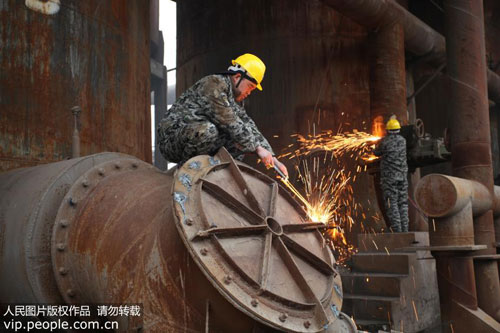
The task of de-capacity is still arduous, and the determination cannot be shaken. As the Supreme Leader emphasized at the G-20 Hangzhou Summit, "China has the greatest strength and the most practical measures in terms of de-capacity, and it will do as it says."
De-capacity is the primary task of supply-side structural reform, and the coal and steel industries with serious overcapacity are the first to bear the brunt.
Affected by the slowdown of economic growth, the optimization of economic structure and the constraints of ecological environment, the demand for coal and steel in China has been slowing down in recent years, and the production capacity is seriously overcapacity, which has restricted the development of the industry.
According to the data of China Coal Industry Association, by the end of 2015, the total capacity of coal mines in China was 5.7 billion tons, but the consumption in the same period was only about 4 billion tons. With the "cliff-like decline" of coal prices, the total profit of coal enterprises above designated size in China last year was 44.08 billion yuan, shrinking by more than half, and the loss of the industry exceeded 90%.
The coal industry is also the hardest hit. According to the data of China Iron and Steel Industry Association, the current crude steel production capacity in China is about 1.2 billion tons, and the utilization rate is less than 67%. Steel prices continued to fall. In 2015, member steel enterprises realized a total profit loss of 64.534 billion yuan, accounting for more than half of the losses.
The industry generally reflects that the profit from selling one ton of coal can’t buy a bottle of drinks; Steel sold for cabbage price. There is a serious imbalance between supply and demand in the market, and de-capacity is imminent.
Learn from a painful experience, and when it is broken, it will be broken. Although de-capacity is as painful as a strong man’s broken wrist, the country’s determination to de-capacity is firm. In an exclusive interview with the People’s Daily, an authoritative person said that if the zombie enterprises are disposed of at a reduced capacity, those who are weaned will be weaned, and those who are cut off from loans will be cut off, and the "infusion tube" and "ventilator" will be resolutely unplugged.
The central government has clearly put forward the goal of reducing production capacity: starting from 2016, China will reduce crude steel production capacity by 100 million to 150 million tons in five years, and withdraw coal production capacity by about 500 million tons in three to five years, and reduce and reorganize it by about 500 million tons.
Staff placement is the key link to resolve excess capacity, and it is very important to do a good job in staff placement. The central government has repeatedly stressed that the resettlement of personnel should be the top priority in dealing with "zombie enterprises" and resolving excess capacity. Training that can be trained, transfer jobs that can be transferred, and those that can’t really transfer jobs should do the detailed work. To this end, the central government has arranged 100 billion yuan of special award funds, focusing on the resettlement of employees.
In addition, in order to solve the difficulties and pain points of excess capacity, in the first half of this year, eight major departments, including the National Development and Reform Commission, the Ministry of Human Resources and Social Security, and the China Banking Regulatory Commission, studied and formulated eight special supporting policy documents on issues such as fiscal and taxation financial support and employee placement. All provinces, autonomous regions and municipalities have signed a "military order" to reduce production capacity, and those who fail to complete the task will be seriously held accountable.
With the support of policies, enterprises are determined to completely shut down excess capacity, and have achieved certain results. The data shows that from January to August this year, the national coal output decreased by about 10% year-on-year, and the operating conditions of coal enterprises improved. In the first half of this year, the national steel production capacity was more than 13 million tons, and about 30% of this year’s target tasks have been completed; The coal industry has withdrawn a total production capacity of 72.27 million tons, which is 29% of the annual target.
Classified regulation is based on city policy.
"destocking" releases potential with "balance"
In recent years, with the rapid development of China’s real estate, long-term accumulated problems and contradictions are increasingly apparent. The mismatch between supply structure and demand has caused a large backlog of inventory, and the serious urban differentiation has also become a prominent problem.
The data shows that in February 2016, the area of commercial housing for sale increased to 739.31 million square meters, reaching an all-time high. The construction area under construction will take at least five or six years to be digested, and these stocks are mainly concentrated in cities with sufficient land supply and less market demand.
The central government regards destocking as one of the five key tasks of supply-side structural reform. Since the beginning of this year, the state has made efforts from the supply side and successively issued a number of policies: vigorously develop the housing rental market, implement both purchase and rent, and allow real estate enterprises to lease housing to speed up destocking; At the same time, in terms of land supply, it is required to moderately increase the scale of land use in areas with tight housing supply and demand, reduce or even stop the supply of housing land in cities with high real estate inventory, and accurately destocking through sub-city policies.
Some cities with high inventory have also introduced measures according to local conditions to stimulate the release of demand. In the first half of this year, Shanxi, Inner Mongolia, Guangxi, Hainan, Fujian, Anhui and other 16 provinces issued supporting policies for destocking with different efforts, releasing new demand from land, housing lease and shantytown renovation.
With the joint efforts of various policies, the effect of real estate destocking has initially appeared. According to the data of the National Bureau of Statistics, by the end of August this year, the area of commercial housing for sale nationwide was 708.7 million square meters, which has been reduced for six consecutive months, with a cumulative decrease of about 30 million square meters.
From the perspective of housing prices, since the beginning of this year, the real estate market in the third-and fourth-tier cities that are at the "freezing point" has achieved initial results. At the same time, the fiery property market has expanded from Guangzhou to Shenzhen at the beginning of the year to second-tier cities such as Nanjing, Suzhou, Hangzhou and Xiamen. The excessively rapid rise in housing prices will not only lead to the digestion of inventory, but also drive the investment enthusiasm of developers, and it is also necessary to be alert to the new inventory that may be brought.
To this end, according to the actual situation of the real estate market differentiation, the state requires adhering to classified regulation and taking measures according to the city. Since the beginning of this year, some first-and second-tier cities where house prices have risen too fast have stepped up regulation. First, the first-tier cities Shanghai and Shenzhen introduced the property market tightening policy; Then, the regulation of hot second-tier cities increased. In second-tier cities such as Xiamen, Hefei, Nanjing and Suzhou, the government has successively introduced regulation policies, or increased the down payment ratio, or restricted the number of housing units, or made new regulations on land auction.
In the last two months, the price increase in some cities has been falling, especially after some purchase restriction policies came out, and the previous consumption potential concentrated on releasing a number of housing demand. The price increase in first-tier cities and some second-tier cities has fallen back, and the previous upward trend has been initially contained.
Destocking is a protracted war, and the pressure still exists. De-stocking should be organically combined with orderly guiding the process of urbanization and the citizenization of migrant workers. Through the "de-stocking" of people’s urbanization, we should gradually improve the differentiated control policies with the central government taking macro and local as the main body.
Hold the bottom line and squeeze out the foam
"De-leverage" shows wisdom with "safety"
High leverage is becoming a lingering worry in China’s economic development. Some corporate bonds in the bond market have defaulted, housing prices in a few cities in the real estate market have risen too fast, and cases in the field of illegal fund-raising have been high. These new situations and problems are closely related to the high leverage ratio, and deleveraging is imperative.
"Trees can’t grow to the sky, and high leverage will inevitably bring high risks. If it is not well controlled, it will lead to a systemic financial crisis, which will lead to negative economic growth and even ruin the savings of ordinary people."
In an article in the People’s Daily on May 9, authorities stressed that the most important thing at present is to actively and steadily promote deleveraging in accordance with the requirements of supply-side structural reform. To de-leverage, we should not flood water at the macro level, break rigid redemption in the micro level in an orderly manner, deal with illegal fund-raising and other chaos according to law, and effectively regulate the market order.
It has become a consensus to abandon the idea of "flooding with water". Authoritative sources pointed out that "in the case that the marginal effect of monetary expansion to stimulate economic growth continues to decrease, we should completely abandon the illusion of trying to accelerate economic growth by loosening monetary overweight and reducing leverage."
In recent years, the central bank has always adhered to the stability and neutrality of monetary policy, and created a neutral and moderate monetary and financial environment for structural reform. The expected target of M2 this year is about 13%, which is still a sound arrangement.
The key to deleveraging lies in the enterprise, and the difficulty lies in the enterprise. According to the research data of the National Finance and Development Laboratory, by the end of 2015, the debt level of non-financial enterprises was relatively high, with the debt ratio as high as 156%. Especially in capital-intensive and overcapacity industries, due bonds appear intensively and financial risk exposure increases.
What should I do? Authoritative sources pointed out that enterprises that really cannot be saved should be resolutely closed, and those that go bankrupt should go bankrupt according to law. Do not engage in "debt-to-equity swap" or "pandering" restructuring.
Many experts told the People’s Daily reporter that in the process of deleveraging, we must follow the principles of marketization and legalization, and the government should play the role of market builder and social security. Among them, the supply of bankruptcy system is a key step for enterprises to deleverage and restore vitality. Li Shuguang, director of the Research Center for Bankruptcy Law and Enterprise Restructuring of China University of Political Science and Law, believes that this will help traders who break the market credit chain to leave in time.
In fact, it has always been a wise test to find the greatest common denominator of the market and promote reform as a whole. De-leveraging is a long and arduous process, which requires active, steady and precise policies. The central government clearly linked "deleveraging" and "de-capacity" with the basic reforms of state-owned enterprises and the financial sector. Specific to the case, it may be a feasible scheme that is considered together from the perspective of market, government and social stability and forms a consensus.
Do subtraction well and do addition well.
"Cost reduction" benefits entities with "action"
"Now the joint boarding inspection is completed once, and the annual cost saved for enterprises can reach more than 13 million yuan." The person in charge of Guangdong Sinotrans Shipping Agency Co., Ltd. said. Thanks to the "three mutual" customs clearance reform of the trinity of "land, water and network" in Dongguan, the costs of enterprises have gradually decreased and the market environment has become healthier.
Enterprises can be profitable and dynamic, and the economy can have lasting development momentum. As one of the five major tasks of supply-side structural reform, cost reduction has entered the stage of tackling difficulties, and the fundamental solution to the task of cost reduction depends on reform and innovation.
In recent years, the development of China’s real economy still faces high cost pressure in many fields. Most enterprises report that there are obvious problems such as "high institutional transaction cost", "high financing cost" and "heavy tax burden". According to the Report on the Survey and Evaluation of Enterprise Burden in 2015 issued by the SME Development Promotion Center of the Ministry of Industry and Information Technology, 79% of enterprises reported that "labor costs are rising rapidly" and 66% reported that "financing costs are high". In addition, the proportion of enterprises reflecting "heavy tax burden" and "difficulty in recruiting workers" reached 54% and 43% respectively.
In view of this, the central government regards cost reduction as one of the five major tasks of supply-side structural reform, and proposes to carry out actions to reduce the cost of enterprises in the real economy.
Since the beginning of this year, China’s cost reduction measures have been continuously enriched, covering decentralization, reducing corporate tax burden, reducing corporate financial costs, comprehensively starting the reform of the camp, reducing logistics costs, and reducing industrial and commercial electricity prices, so as to reduce the burden on enterprises in all directions. In August this year, the state issued the Work Plan for Reducing the Cost of Enterprises in the Real Economy, which made a comprehensive arrangement for reducing the cost of enterprises in the real economy in the coming period, and clearly stated that in about three years, the comprehensive cost of enterprises in the real economy will be reasonably reduced, their profitability will be significantly enhanced, and their industrial competitiveness will be further enhanced.
At the same time, local cost reduction programs are also being introduced intensively. According to statistics, at present, more than 20 provinces have formulated and introduced cost reduction work plans and targets in light of local actual conditions. Among them, Guangdong strives to reduce the burden on enterprises by 400 billion yuan by the end of this year, Tianjin is expected to reduce the burden on enterprises by more than 58 billion yuan each year, Jiangsu is expected to reduce the burden on enterprises by 100 billion yuan this year, Jiangxi is expected to reduce the burden on enterprises by 50 billion yuan, and Guizhou is expected to reduce the burden on enterprises by more than 70 billion yuan throughout the year … …
As an important part of supply-side structural reform, cost reduction not only requires the government to increase reform and innovation, but also requires enterprises to "take the initiative" and actively participate in it. The state strongly encourages and guides enterprises to tap their internal potentials, guides enterprise management innovation and lean production, and uses information technology to reduce costs; Strengthen the promotion of advanced technology and encourage enterprises to strengthen target cost management. Only when the external and internal forces are exerted at the same time can the cost be minimized.
It should be noted that the previous cost reduction policies and measures have begun to bear fruit. According to statistics, this year 1-mdash; In July, the cost per 100 yuan of main business income of industrial enterprises above designated size was 85.83 yuan, down 0.17 yuan year-on-year; The profit rate of main business income was 5.67%, up 0.19 percentage points year-on-year.
It takes a long time to reduce costs. On the basis of the previous cost reduction results, through the joint efforts of the government and enterprises, the implementation of the cost reduction plan will further reduce the cost of enterprises and inject more kinetic energy into the real economy.
Innovation drives thinning and bottoming.
"Make up the shortcomings" and lay a solid foundation with "innovation"

On September 15th, China launched the Tiangong-2 Space Laboratory with the Long March-2 FT2 rocket at Jiuquan Satellite Launch Center. (Photo by Xinhua News Agency reporter Zhen Zhenhua)
"Innovation is the first driving force for development. Grasping innovation means grasping development, and seeking innovation means seeking the future. The key to adapting to and leading the new normal of China’s economic development is to rely on scientific and technological innovation to transform the development momentum. "
In recent years, China’s technological innovations in high-performance computers, manned spaceflight, lunar exploration, mobile communication, quantum communication, Beidou navigation, manned deep diving, high-speed railways, aircraft carriers and other fields have provided strong support for China’s economic and social development. At the same time, we should also see that although the emerging science and technology industries are growing strongly, they are not enough to offset the slowdown of traditional industries, and the backward technical equipment and insufficient innovation ability of enterprises are still the weak links in China’s economic transformation and upgrading.
As an important part of the supply-side structural reform, the short board is to make up these short boards. The central government emphasizes that it is to improve the "barrel capacity" of China’s economy by deepening reform, implementing innovation-driven, expanding effective supply, promoting the concentration of innovative elements to enterprises, and accelerating innovation in technology, products and formats.
As General Secretary of the Supreme Leader pointed out: "Promote the sustained and healthy development of China’s economy and society, promote the supply-side structural reform, and implement ‘ Three go, one drop and one supplement ’ The task must be a fundamental change in the endogenous motivation and vitality to promote development, and shape more leading development driven by innovation and giving full play to the first-Mover advantage. "
Since the beginning of this year, many provinces in China have issued specific action plans to "fill the shortcomings" in supply-side reform, with an investment scale of more than one trillion. One of them is the transformation and upgrading of traditional industries. For example, Guizhou has proposed that 70 billion yuan will be invested in technological transformation this year, while Sichuan has allocated 1 billion yuan of provincial industrial development funds for technical transformation and technological innovation subsidies. Shanghai proposes to strive to form a high-quality, sustainable and dynamic industrial development pattern by 2020.
On the other hand, we should vigorously develop strategic emerging industries. For example, Zhejiang mentioned that it should vigorously develop seven major industries, such as the core industry of information economy, financial industry and high-end equipment manufacturing industry; Guizhou will focus on the development of big data industry, and the development goal is that the total scale will increase by more than 20% annually. Shanghai said that it is necessary to give full play to the overall coordination role of Zhangjiang National Independent Innovation Demonstration Zone, explore the establishment of cooperation and exchange mechanisms among industrial parks in this city, and better promote the project landing and industrial layout optimization.
If you have extraordinary merits, you must treat extraordinary people. "Talent is the foundation of innovation, and innovation-driven is essentially talent-driven." General Secretary of the Supreme Leader emphasized that whoever has first-class innovative talents will have the advantages and leading power of scientific and technological innovation. It is necessary to select and use the best talents in the world, implement a more active policy of introducing innovative talents, and gather a group of leading talents who stand at the forefront of science and technology in the industry and have international vision and ability. The important conclusion of the Supreme Leader General Secretary profoundly reveals the relationship between talents and innovation, points out the breakthrough and focus of innovation-driven development strategy, and needs to fill the shortcomings of innovation-driven talents in China.
In March this year, the Central Committee issued the Opinions on Deepening the Reform of the System and Mechanism of Talent Development, proposing a number of measures to speed up the construction of a strong country with talents, to stimulate talents to innovate and create entrepreneurial vitality to the maximum extent, and to gather outstanding talents from all walks of life into the cause of the party and the state to provide strong talent support for realizing the goal of "two hundred years".
Since then, all parts of the country have also introduced relevant talent policies to reform the system and mechanism of talent development. A series of reform measures are put forward in the aspects of management system, introduction and use, training support, evaluation flow, incentive and guarantee, etc., so as to stimulate talent innovation and create entrepreneurial vitality to the maximum extent and provide strong talent support for innovation drive.
Innovation is an inexhaustible motive force for human development, and innovation is the soul of national progress. As long as we in Qi Xin work together to fill the shortcomings, implement the innovation-driven development strategy, build an innovative country, and unswervingly follow the road of strengthening the country through science and technology, we will surely realize the goal of China’s great national rejuvenation.
The five major tasks of "three to one, one reduction and one supplement" are the breakthrough of supply-side structural reform. Deepening reform in an all-round way is the fundamental driving force for promoting structural reform on the supply side.
"At present and in the future, it is the peak period for comprehensively deepening the reform and the crucial period for implementing the reform task. The task of grasping planning, overall planning and implementation is still arduous and arduous." Facing the future, General Secretary of the Supreme Leader put forward new tasks and requirements at the 27th meeting of the Central Deep Reform Group.
"Only when it is difficult is it more brave; Only when it is done, it is precious. " Entering the "Wanshan Circle" of the new normal of economic development, when encountering problems, we must show the courage of "opening roads on every mountain and bridging bridges when encountering water". Only by vigorously deepening reforms in an all-round way can we "decorate this mountain and look better today".

Today, an official conclusion has been reached on the catastrophic accident at Fengcheng Power Plant in Jiangxi Province.
The investigation team of the State Council found out that the construction unit Hebei Yineng Yanta Engineering Co., Ltd. had chaotic management on the construction site, failed to formulate the management control measures for formwork removal as required, and lost control over the management of formwork removal process.

On November 24, 2016, a particularly serious accident occurred in the third phase expansion project of Jiangxi Fengcheng Power Plant, which caused 73 deaths and 2 injuries, and the direct economic loss was 101.972 million yuan.
The investigation team found that in addition to the construction unit, the local government and relevant regulatory authorities all had oversight in the accident.
Therefore, the State Council instructed the Jiangxi provincial government to make an in-depth inspection of the State Council.
At the same time, Li Yihuang, the vice governor in charge of production safety, failed to effectively guide and urge relevant departments and provincial enterprises to implement the responsibility for production safety due to his poor leadership in implementing the relevant national policies, laws and regulations on production safety, and he was informed according to the law and discipline.
More than that, another 47 responsible personnel were given disciplinary action, admonishing conversation, notification, criticism and education according to law and discipline. The judicial organs have taken criminal compulsory measures against 31 responsible persons according to law.

In the past two years, there have been many inspections by local governments to the central government. Then, under what circumstances will local governments be required to make inspections to the central government?
First, the implementation of the central policy is not effective, and even the yin obeys the yang.
The most typical case is the ecological environment problem of Qilian Mountain National Nature Reserve this year. The Central Office and the State Council jointly notified the Gansu Provincial Party Committee and the provincial government to make an in-depth inspection to the CPC Central Committee. At that time, the main responsible comrades of the provincial party Committee and the provincial government seriously reflected and learned lessons.
The circular clearly pointed out that Gansu’s implementation of the decision-making and deployment of the CPC Central Committee is not firm and thorough. The Gansu Provincial Party Committee and the provincial government did not deeply understand the extreme importance of ecological environment protection in Qilian Mountain from a political and overall perspective, and did not really grasp the real management and grasp it to the end in their work.
Second, under normal circumstances, local governments will be required to make inspections in case of extraordinarily serious production safety accidents.
How to define the extraordinarily serious production safety accident? According to the Regulations on Reporting, Investigation and Handling of Production Safety Accidents, which came into effect in June 2007, accidents that caused more than 30 deaths, or more than 100 serious injuries, or direct economic losses of more than 100 million yuan were particularly serious accidents.
Therefore, regardless of the number of deaths or economic losses, the accident of Fengcheng Power Plant in Jiangxi Province is a serious production safety accident.
Prior to this, the Tianjin Port explosion, "11• 22 "Qingdao oil pipeline explosion, Shanxi Hongdong" 12• 5 "mine disaster, etc., the local provincial governments are required to make an inspection to the State Council.
Third, because of the serious traffic accidents, local governments need to check with the central authorities.
In July 2012, the State Council issued "Opinions on Strengthening Road Traffic Safety", proposing that the provincial people’s government should make a written inspection to the State Council in case of particularly serious road traffic accidents or three or more major road traffic accidents within one year.
In 2014, an explosion accident of hazardous chemicals occurred on Jinji Expressway, resulting in 40 deaths, 12 injuries, and 42 vehicles burned, resulting in a direct economic loss of 81.97 million yuan. At that time, Shanxi Provincial People’s Government was instructed to make an in-depth inspection to the State Council.
Fourth, public events with extremely bad social impact have greatly damaged the image of the party and the government.
The most typical case in this respect is the incident of Shanxi Black Brick Kiln in that year. In 2007, Shanxi Province was exposed many incidents in which the owners of black brick kilns illegally restricted the personal freedom of migrant workers, illegally hired child workers, forced migrant workers to work overtime, and beat migrant workers to death and disability, which caused extremely negative social effects and even triggered large-scale reports from foreign media. Afterwards, the Shanxi provincial government made an inspection to the State Council.
CCTV News:According to the WeChat WeChat official account of the China Embassy in South Korea, the spokesman of the China Embassy in South Korea expressed firm opposition and strong protest against the visit of Zheng Yuze, deputy speaker of the South Korean National Assembly, to Taiwan, China. The details are as follows.
I noticed that from 28th to 31st last month, the Deputy Speaker of the South Korean National Assembly, Zheng Yuze, and some members of parliament made a surprise visit to Taiwan, China to meet with Tsai Ing-Wen, You Xikun and others. This is a serious violation of the one-China principle and the spirit of the communique on the establishment of diplomatic relations between China and South Korea, and runs counter to the development of friendly relations between China and South Korea. China firmly opposes and strongly protests this.
Taiwan Province is an inalienable part of the territory of China, and the question of Taiwan Province is purely an internal affair of China. The one-China principle has become the consensus of the international community and the basic norm of international relations. The communique on the establishment of diplomatic relations between China and South Korea clearly stated that "the Republic of Korea recognizes People’s Republic of China (PRC) as the sole legitimate government of China and respects China’s position that there is only one China and Taiwan Province is a part of China". This is a solemn commitment made by the ROK to China and the political basis for the establishment of diplomatic relations and the development of relations between China and South Korea. We resolutely oppose any form of official exchanges between South Korea and Taiwan Province.
The current situation in the Taiwan Strait is highly complex and sensitive. The ROK has repeatedly mentioned its concern for peace and stability in the Taiwan Strait. It should be pointed out that the biggest threat to peace and stability in the Taiwan Strait is the stubborn separatist activities of "Taiwan independence" forces such as Tsai Ing-Wen and You Xikun and the illegal connivance of some external forces. The Korean National Assembly plays an important role in the political and social life of Korea. The Deputy Speaker of the South Korean National Assembly should be aware of the South Korean government’s foreign commitments. His visit to Taiwan Province violated the South Korean commitment to China, sending a serious wrong signal to the "Taiwan independence" forces, damaging the friendly political foundation between China and South Korea, which is extremely dangerous and will have a serious impact on China-South Korea relations.
China has made solemn representations to the ROK, and seriously urged the ROK to recognize the harm of this incident, take timely measures to eliminate the adverse effects, earnestly abide by the one-China principle and the spirit of the communique on the establishment of diplomatic relations between China and South Korea, and refrain from conducting any form of official exchanges with Taiwan Province to safeguard the overall situation of China-ROK relations with practical actions.
Today is a day that the people of Chinese must always remember. Today, 73 years ago, on August 15, 1945, Japanese radio broadcasted the Imperial edict read by Emperor Hirohito himself, announcing unconditional surrender.

73 years ago today
The front page of almost every newspaper in China.
Are written in bold characters.
Japan surrendered

Since July 7, 1937,
The Lugouqiao Incident broke out,
Japanese imperialism set foot on the land of China.
Shijiazhuang was also ravaged by the Japanese aggressors …
▼

On the night of July 7, 1937, when the Japanese army was practicing near Lugou Bridge in the southwest of Beiping, they asked to enter Wanping County for a search on the pretext that a soldier was "missing", but 29 army, the garrison of China, sternly refused. The Japanese army then shot at the defenders of China and shelled Wanping Ancient City. 29 army rose up against Japan. This is the "July 7th Incident" that shocked China and foreign countries, also known as the Lugouqiao Incident. The "July 7th Incident" was the beginning of Japanese imperialism’s full-scale war of aggression against China, and it was also the starting point of the Chinese nation’s full-scale war of resistance.
On July 29th, 1937, Tianjin fell!
On July 31, 1937, Beiping fell!
Baoding fell on September 24, 1937!
In early October 1937, the Japanese army began to attack Shijiazhuang …

After the Japanese invaders occupied Baoding, they went south along the Pinghan Railway. On October 9, 1937, Zhengding was occupied by the Japanese army, and more than 2,000 soldiers of China Army died for their country.

▲ Japanese attack Zhengding city wall
On October 9, 1937, the Japanese army began to attack Shijiazhuang. At 14: 30 on the 10th, Japanese troops occupied Shijiazhuang.

▲ On October 11, 1937, it occupied the Japanese Iwakura Department in Shijiazhuang, Hebei Province.

▲ China army trucks overturned by Japanese bombing.
When Shijiazhuang fell, the Japanese aggressors began to rule brutally.
On October 10, 1937, Shijiazhuang fell. In the early summer of 1938, the Japanese army occupied farmland near Ping ‘an Park in Shijiazhuang city and built a barracks called South Barracks.

▲ Schematic diagram of Shijiazhuang concentration camp
This is a prisoner-of-war labor concentration camp with the longest history, the largest number of detainees, the worst persecution and the fiercest struggle in China.

The South Barracks successively arrested and detained about 50,000 anti-Japanese soldiers, civilians and innocent people. Among them, about 30 thousand people were sent to North China, Northeast China and Japan as laborers, and about 20 thousand people were tortured and died in concentration camps.

On August 15, 1997, this monument to the suffering compatriots in Shijiazhuang concentration camp was built in the ruins of the concentration camp and now Ping ‘an Park.

▲ Monument in Ping ‘an Park, Shijiazhuang
However, the heroic people of Shijiazhuang did not give in!
They created one miracle after another in the history of the Anti-Japanese War.
On this day that must be remembered,
Let’s follow these traces of history,
Look at how the people of Shijiazhuang resisted the Japanese invaders!
NO.1
Gaocheng
Slaughter can’t stop the tenacious war of resistance
On the morning of October 12, 1937, more than 5,000 Japanese troops surrounded Meihua Town, and the invaders began a four-day and three-night massacre. Smoke billowed over Meihua Town, flames were blazing, gunfire, door slamming and the crying of adults and children became one.

It was not until noon on October 15th that the Japanese army left Meihua Town. According to the detailed statistics afterwards, there were 550 families and 2,500 people in Meihua Town. 46 families were killed, killing 1547 people.
The tragedy in Meihua Town aroused the awakening and resistance of Gaocheng people. A month later, the anti-Japanese armed forces organized by the Communist party member Mayutang captured the county seat and captured more than 40 Japanese troops.

In memory of the victims, Meihua Town built the "Martyrs Pavilion" in 1946, which was rebuilt twice in 1968 and 1986, and preserved four large tragic sites-windlass puddle, alkaline water pit, blood well and thirty-six graves.
NO.2
Jingxing
Six strong men’s blood stained Guayun Mountain.
Xiaoliyan Village in Jingxing is the first frontier command post established by Commander Nie Rongzhen in the Hundred Regiments War. On August 20th, 1940, Commander Nie Rongzhen fired the first shot of the attack on Zhengtai Road here.

▲井陉县辛庄乡小里岩村——百团大战纪念碑林所在地
1940年秋,日本侵略军对位于井陉东北部的挂云山展开合围。激战中,中队长李鸿山中弹牺牲,年仅22岁的姑娘吕秀兰勇敢地站出来指挥战斗。六勇士与攻上山的日伪军展开殊死搏斗,终因弹尽粮绝,被逼到悬崖边,宁死不屈,砸碎枪支,纵身跳崖,壮烈牺牲。

他们是共产党员吕秀兰、15岁的儿童团员康三堂、炊事员刘贵子,还有康英英、李书祥和康二旦,后被人们称颂为“挂云山六壮士”。
NO.3
深泽
打响宋庄战役
宋庄位于深泽县东北十五里,并且挖有地道,是个有利于进行村落战的村庄。八路军二十二团两个连和藁无大队一部驻北宋庄,警备旅一个连和晋深极大队一部驻南宋庄。1940年6月7日凌晨三点多,几支部队迎来了残酷的战斗。
善打伏击战的二十二团团长左叶最先发现敌人骑兵,待敌人距阵地三十米时,一挺重机枪、三挺轻机枪和一个掷弹筒,一齐开火,打伤了率三十多个骑兵进村的日军支队长坂本吉太郎。

他们顶住了日伪军两千余人的围攻,以毙伤日伪军三百余人后突围而去。宋庄战役是一次当时在世界乃至后世都备受称颂的伟大战役。
NO.4
晋州
刘胡兰式的女英雄杨岭梅
In the Martyrs Cemetery located in Dongsheng Road, Jinzhou City, stands a 45-meter-high white marble statue of Yanglingmei Martyr. In 1986, General Lv Zhengcao wrote an inscription: "Liu Hulan-style heroine in Jizhong Plain-martyr of Yanglingmei".

Yang Lingmei was born in 1921. She was vigorous, honest and active. She mobilized women to spin and weave, made military clothes and shoes for the Eighth Route Army, and led women to dig ditches and break roads, stand guard, check pedestrians and monitor enemy agents.

At 3 am on April 30, 1940, the Japanese puppet troops suddenly surrounded Nantian Village. In order to protect documents, Yang Lingmei and her colleagues were arrested in Nantian Village. After being arrested, Japanese soldiers locked Yang Lingmei in a big wooden cage and tortured her. The enemy paraded her naked. Yang Lingmei shouted to the crowd in the street: "Folks, follow communist party and defeat the Japanese dog robbers …"

The Japanese army took Yang Lingmei under the wall of Dongguan, and she opened her eyes and shouted, "Down with Japanese imperialism! Down with traitors and traitors! Long live communist party! ….. "Finally, the enemy nailed Yanglingmei to the wall with special big nails.
On May 6th, Yang Lingmei died heroically at the age of 19.
NO.5
positive definiteness
Zhengding people’s "tunnel warfare"
Gaojiazhuang in the movie Tunnel Warfare
It is Gaoping Village in Zhengding!
▼

During the Anti-Japanese War, Zhengding Gaoping Village was a village of fighting and heroes. The Japanese puppet troops besieged Gaoping on a large scale five times, and more than 50 militiamen in Gaoping used tunnel cover to set a brilliant record of fighting the Japanese puppet troops for more than 50 times, killing 400 Japanese puppet troops and defeating thousands of enemies for five attacks.

Bury the mines and carry the guns.
You drill the tunnel, I’ll go to the room.
Commanding point, blocking the street wall.
Form a barrage,
Although we are plowmen,
Beat the devil into my village again.
More than 70 years ago, villagers in Zhengding Gaoping wrote and sang this authentic battle song and waged a resolute struggle with the enemy! The most beautiful battle fought by Gaoping people took place on May 4, 1945. For more than 1600 days, the puppet troops surrounded the village in an attempt to destroy the tunnel and subdue Gaoping.

▲ Zhengding Gaoping County Tunnel
The village militia quickly entered the combat post, and men, women and children immediately got into the tunnel. In the face of the enemy’s fierce attack, the militia beat the enemy with grenades at the commanding heights of the roof. In this battle, Gaoping militia killed 59 Japanese puppet troops, including 4 commanders, and blew up 7 carts.

▲ Zhou Baoquan, who is over 90 years old, used to be the squad leader of Gaoping villagers.
During the Anti-Japanese War, soldiers and civilians in Gaoping Village of Zhengding County killed and wounded more than 2,240 enemies, captured more than 1,590 enemies, and seized more than 2,870 guns and more than 20,000 bullets.
In 1963, the creative group of the film "Tunnel Warfare" interviewed in the village took Gaoping Village as one of the prototype villages of the film "Tunnel Warfare".
NO.6
Lingshou
Lingshou Chen Zhuang annihilation war
The Japanese aggressors committed heinous crimes against the people of Lingshou: they massacred 5,252 people, leaving 2,095 people unaccounted for; Plague caused by bacterial weapons and hunger caused by war killed 10414 people and disabled 3736 people; More than 15,000 laborers …

▲ Japanese weapons seized in Chen Zhuang’s annihilation war

▲ Chen Zhuang fought for six days and five nights.
In September 1939, 1,500 Japanese troops attempted to occupy Chen Zhuang. Under the command of He Long and Nie Rongzhen, it took 6 days and 5 nights to kill more than 1,280 people below the head of the enemy brigade, capture 16 people, and seize 3 mountain guns, 23 light and heavy machine guns, more than 500 rifles and more than 50 war horses.

▲ Villagers in Xiaohanlou Village, Lingshou County made their own soil guns.
NO.7
Hirayama
The ditch beams are full of fighting.
The Japanese army has made more than 50 major tragedies in Pingshan County, killing 14,000 innocent people, covering more than 300 villages in the county.
However, Pingshan, a Taihang Mountain county with a population of only 250,000, has 70,000 people joining the army, 12,000 people joining the Eighth Route Army, and 5,000 martyrs died for their country …
Pingshan is a strong base!
Pingshan people are heroic people!
Hirayama Regiment, the 718th Regiment of the 359th Brigade in the Megatron World.
▼

On September 28th after the July 7th Incident, the Eighth Route Army came to Hongzidian in Pingshan. More than 1700 children of Taihang resolutely left their hometown. This anti-Japanese armed force, known as the "Children’s Army on the Taihang Mountain", was incorporated into the "359 Brigade" led by Wang Zhen, and the Pingshan Group repeatedly made outstanding achievements …

▲ Peasant children heading for the anti-Japanese battlefield

▲ Fan Mingtang, an old soldier of Pingshan Regiment
"When a soldier hits a devil!"
The autumn wind blew this slogan all over the gullies and beams in Pingshan County.

▲ The headquarters of the Japanese army in Pingshan

▲ Dismantle the devil’s turret.
Pay tribute to the hero: return to the big gun class
The militia can also intimidate the enemy.
▼

At the beginning, there were only six members of Pingshan Huishe’s big gun class, and one and a half guns started a revolution. Later, many villagers participated in many villages. They killed the Japanese aggressors, fought against mopping-up, carried artillery towers, and transported public grain. They fought bravely against the Japanese aggressors’ aggression and repeatedly made meritorious military service, which was received by Nie Rongzhen, commander of the military region.

▲ On May 4, 1941, Commander Nie Rongzhen met with the representative of the "big gun class" in Donghuishe.
From its founding to War of Resistance against Japanese Aggression’s victory in 1945, the Big Gun Squad fought against the enemy 257 times, destroyed 8 enemy bunkers, captured 3 enemy strongholds, wiped out 274 Japanese puppet troops, and seized more than 180 guns, 1 small gun and more than 150,000 bullets.
Protect the hero "Wang Erxiao" of Xinhua Radio and Newspaper with his life.
▼

"Cattle are still grazing on the hillside, but the cattle herders don’t know where they are …" This song, written in the autumn of 1942, was sung all over China. One of the archetypes of the little hero "Wang Erxiao" in the song is Yan Fuhua, a native of Nangonglonggou Village, Zhabei Township, Pingshan County.
Shi Linshan, an 80-year-old man, will never forget that he witnessed the scene that 13-year-old Yan Fuhua (second brother) was picked off the cliff by the bayonet of the Japanese devil and the river was dyed red with blood …
At that time, Xinhua Radio Station (predecessor of china national radio), Shanxi-Chahar-Hebei Daily (predecessor of People’s Daily) and some revolutionary armed forces were stationed in the nearby Gunlonggou village. "In order to protect everyone’s smooth transfer, the second brother has been dragging the devil around the mountain to delay the time."
Finally, Yan Fuhua took a group of devils to the top of Erdaoquan, and everyone had no choice. 13-year-old Yan Fuhua suddenly hugged the thigh of a devil around him and wanted to jump off a cliff with the enemy! A cold bayonet quickly stabbed him from behind, and in an instant, Yan Fuhua was picked off a cliff more than 20 meters high by the devil!

▲ Recalling the scene of the second brother’s sacrifice, Shi Linshan, who is in his 80 s, burst into tears.
It was not until the evening that Shi Linshan and the villagers found Yan Fuhua’s body from the bottom of the cliff and buried it. "No matter the old man or the child, everyone cried." Shi Linshan said with tears in his eyes that the river at the bottom of the cliff was really dyed red …

Such a story can’t be told for three days and nights.
There are Wuji, Zhaoxian, Gaoyi, yuanshi county,
Praise the emperor, promote the Tang Dynasty, and enjoy new music …
Such battles take place on the land of Shijiazhuang every day.
We must not forget the invaders,
Don’t forget the hero’s children in Shijiazhuang!
Remember history and pay tribute to heroes!

Shijiazhuangfabu is integrated from WeChat WeChat official account Beiyang House, Hebei Daily, Shijiazhuang Daily, etc.
Operation | Shijiazhuang Radio and TV Station New Media Center
Editor | Chen Zhi

Wonderful review of the past
Municipal Government Emergency Office @ All Shijiazhuang people: There will be heavy rainfall in our city during the day from tonight to the 15th.
Find someone! CCTV likes them! Do you know anyone?
Hot hot! Shijiazhuang summer resort collection! Where do you want to go most? Come and vote!